

Don’t Get Left in the Dark: How to Choose Top-Rated Backup Generator Installers
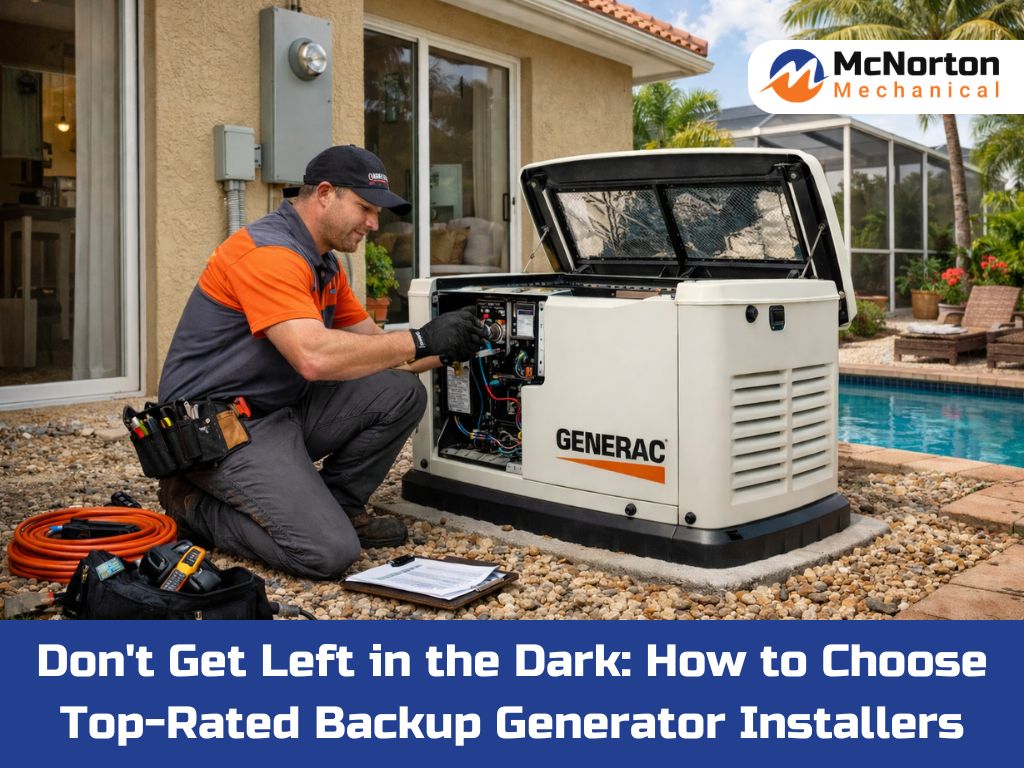
When the sky turns that specific shade of “hurricane gray” and the wind starts howling through the oaks in Pensacola, the last thing you want to wonder is if your generator was installed correctly. Finding backup generator installers near me isn’t just about finding someone with a truck and a wrench; it’s about finding a partner who understands the high stakes of Gulf Coast weather.
Licensing and Local Permits
In Florida and Alabama, generator installation is not a “handyman” special. It requires a sophisticated dance between electrical work and plumbing (for fuel lines). I always tell my clients that a reputable installer must be a licensed electrician. Why? Because they are tapping into your home’s main electrical heartbeat.
Furthermore, local permits are a must. Whether you are in Escambia County or Baldwin County, most towns require electrical and mechanical permits for standby systems. A top-tier installer handles this paperwork for you. They understand local inspections and the wind-load rules for concrete pads in storm-prone areas. As Florida Disaster’s Hurricane Preparedness for Businesses explains, having a plan and professional help will make sure your generator works when the power goes out.
Turn-Key Service and Site Preparation
The best backup generator installers near me offer “turn-key” solutions. This means I handle everything from the initial site survey to the final startup test.
- Site Survey: We look at where your gas meter is, where your electrical panel sits, and where the generator can safely go (usually at least 5 feet from openings like windows and doors to prevent carbon monoxide risks).
- The Pad: Standby generators are heavy. They require a leveled concrete pad or a pre-formed high-impact base to ensure they don’t sink into our sandy Florida soil.
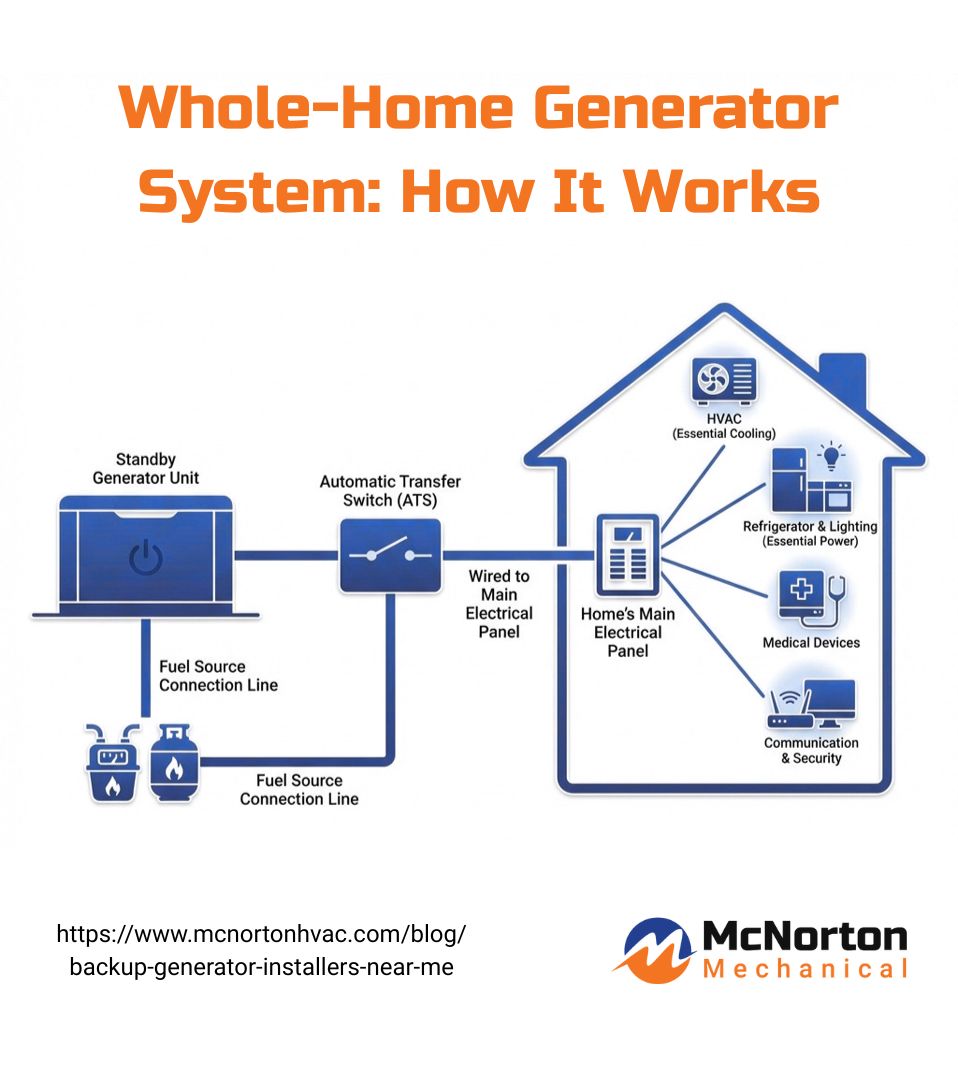
- Code Compliance: This includes ensuring the exhaust points away from the structure and that the wiring meets the National Electrical Code (NEC). For more details on how we handle these specifics, you can see more info about generator services.
Determining Your Home’s Power Needs and Sizing
One of the biggest mistakes I see is homeowners buying a generator that is too small for their needs. You don’t want to find out your generator can’t start your AC compressor right when the heat index hits 100 degrees in Gulf Breeze.
Generator Types: Standby vs. Portable vs. Inverter
- Standby Systems: These are permanent fixtures, often looking like a large AC unit. They run on natural gas or liquid propane (LP) and start automatically within seconds of a power loss.
- Portable Units: These are mobile and usually run on gasoline. They require manual setup—dragging them out of the garage, fueling them up, and plugging them into a manual transfer switch.
- Inverter Technology: Often found in smaller portables, this provides “clean” power safe for sensitive electronics like laptops and high-end TVs.
Sizing Your System (kW)
Sizing is based on kilowatts (kW). To get it right, I perform a load calculation.
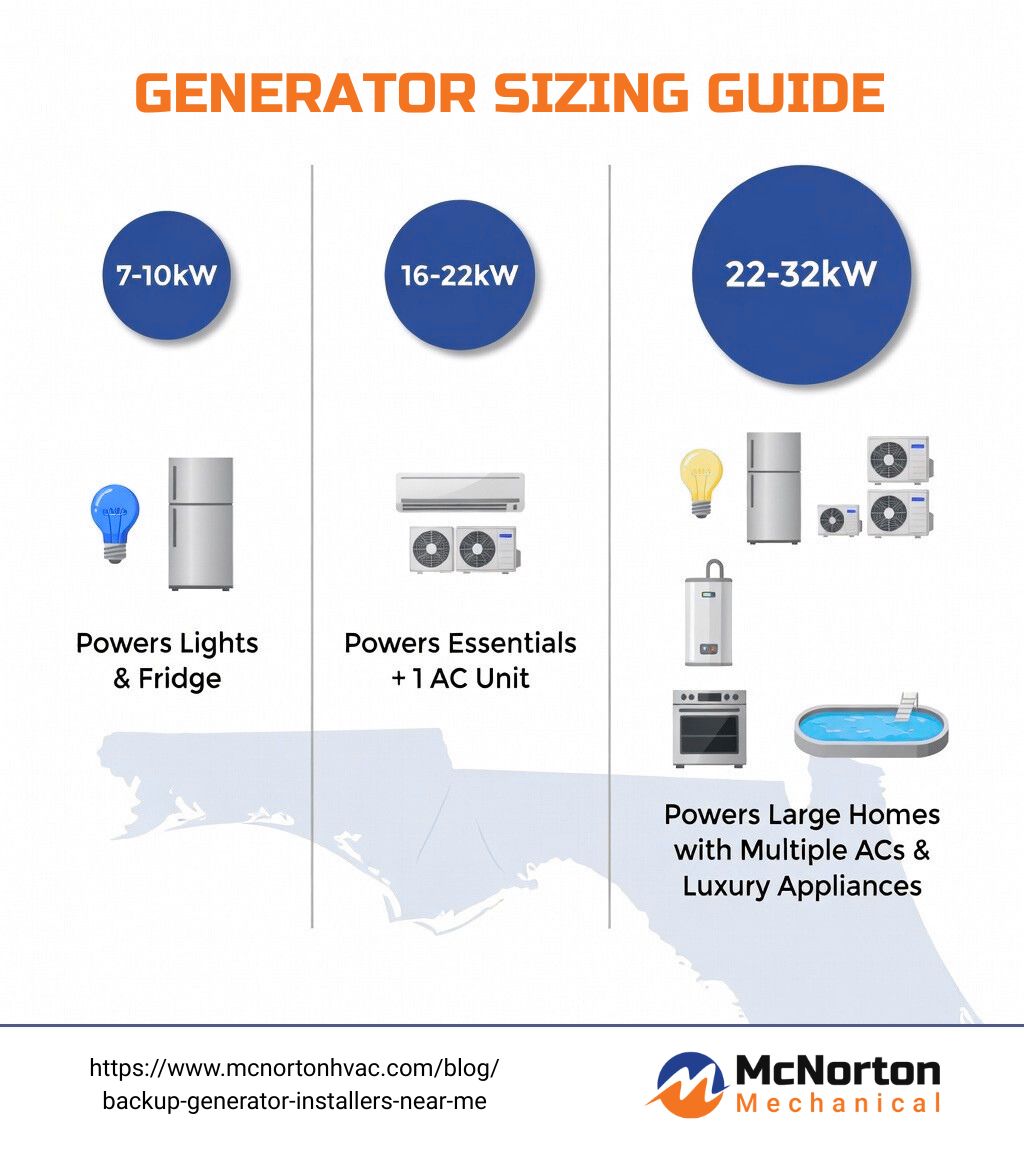
- 16–22 kW Systems: These are the “sweet spot” for many mid-sized homes in our area. They can usually power the essentials: lights, refrigeration, a few outlets, and a standard 3-ton AC unit.
- 22–32 kW Systems: These are for true whole-home coverage. If you have a large home, multiple AC units, an electric water heater, and a pool pump, you’ll likely need this higher range to ensure the system doesn’t “bog down” under load.
Data from the U.S. Energy Information Administration shows that Florida leads the nation in weather-related outages. This makes proper sizing even more critical; a system that is constantly overloaded will fail prematurely.
Comparing Costs for Backup Generator Installers Near Me
While I won’t give you a specific “final price” (because every home in Milton or Navarre is different), I can help you understand what goes into the investment. The total cost is a combination of the machine itself, the automatic transfer switch (ATS), and the labor for electrical and gas plumbing.
| Component | Portable Hookup (Manual) | Whole-Home Standby (Automatic) |
|---|---|---|
| Equipment Cost | Lower (Generator + Cord) | Higher (Permanent Unit) |
| Installation Labor | Moderate (Inlet box + Switch) | Extensive (Pad, Gas, Electrical) |
| Transfer Switch | $1,000 – $2,500 (Manual) | Included in System (Automatic) |
| Permits & Fees | Minimal | Standard Local Requirements |
| Total Range | $4,000 – $9,000 | $10,000+ |
Note: These are general industry ranges for the Gulf Coast area. Complex gas line runs or electrical panel upgrades can move these numbers.
At McNorton HVAC, we understand that a whole-home system is a significant investment. That’s why we offer special financing offers to help our neighbors in Santa Rosa and Okaloosa counties get the protection they need without breaking the bank.
The Importance of Professional Maintenance and Safety
A generator is an engine. Just like your car, it needs oil changes, filter replacements, and “exercise.” Most standby units are programmed to run for 10-12 minutes once a week just to keep the parts lubricated and the battery charged.
Maintenance and Lifespan
With professional care, a high-quality standby generator can last up to 3,000 hours of run time. In “calendar years,” many homeowners see these units last 20 to 50 years if they aren’t abused.
- Annual Inspections: We check the spark plugs, change the oil, and test the battery.
- Battery Testing: The #1 reason a generator fails to start is a dead battery. We test these every year to ensure they have the “cranking amps” needed for a cold start.
Safety and “Backfeeding”
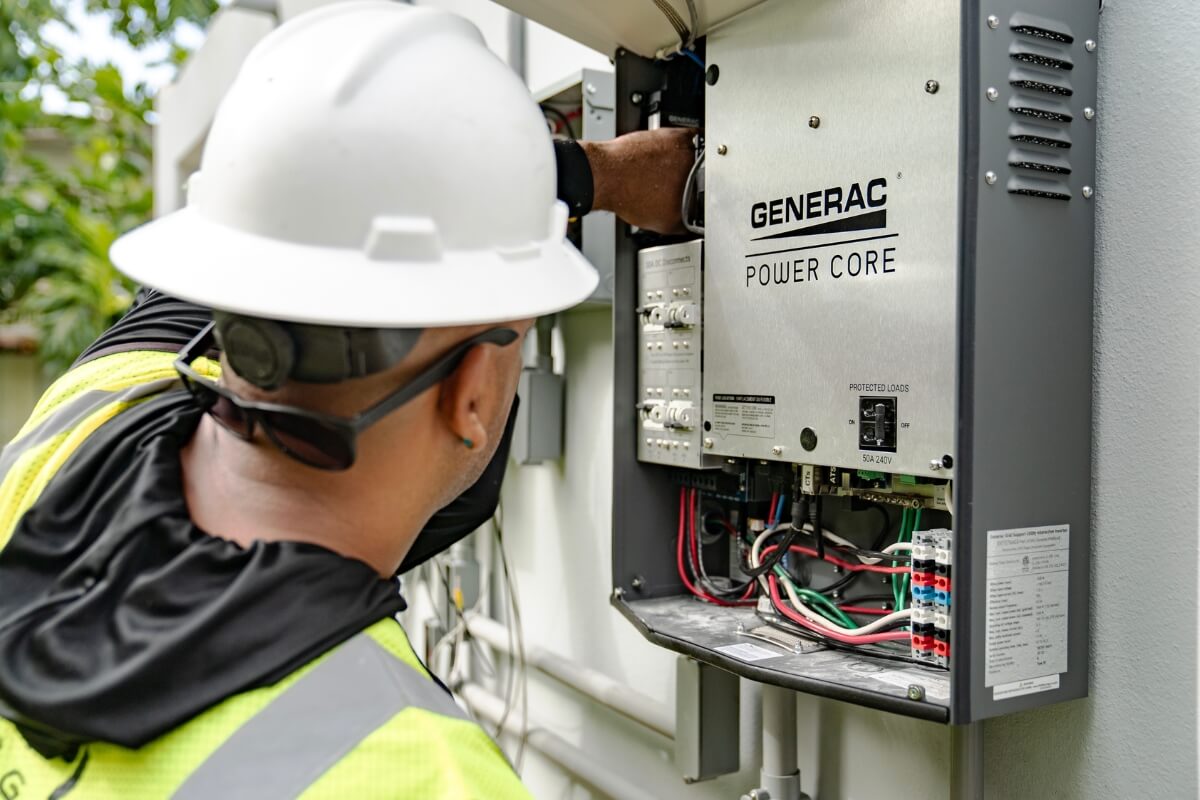
I cannot stress this enough: Never plug a portable generator into a wall outlet (dryer plug). This is called “backfeeding.” It is illegal, extremely dangerous, and can send electricity back into the utility lines, potentially killing a line worker trying to restore power. Following electrical safety during outages protocols means using a professionally installed transfer switch. This switch acts as a “gatekeeper,” ensuring your home is disconnected from the grid before the generator power kicks in.
What to Look for in Local Reviews and Credentials
When searching for backup generator installers near me, don’t just click the first ad you see. Look for deep roots in the community.
- 65+ Years of Experience: Companies that have survived decades of Florida hurricanes know what works and what doesn’t.
- 24/7 Availability: If your generator has an issue at 2 AM during a tropical storm, you need an installer who answers the phone.
- Written Estimates: Never accept a “handshake” price. A professional estimate should detail the kW size, the brand (like Generac), the gas line length, and the permit fees.
- Local Reviews: Check Google and the Better Business Bureau. Look for mentions of “professionalism,” “clean job site,” and “reliability during the last storm.”
Frequently Asked Questions
Choosing the right installer means you can sleep through a thunderstorm knowing your lights will stay on and your fridge will stay cold. Beyond comfort, a whole-home generator increases your property value and protects your home’s infrastructure. For instance, in areas like Perdido Beach or Orange Beach, keeping the AC running prevents the rapid mold growth that occurs when Florida humidity meets a powerless home.
At McNorton HVAC, we’ve been serving the Pensacola area and Baldwin County for over six decades. We aren’t just installers; we are your neighbors. We know the local codes from Atmore to Gulf Shores and everywhere in between.
How long does the installation take?
Most standard installations take between 1 and 3 days. The “day of” installation involves setting the unit and doing the wiring. The rest of the time is usually spent waiting for municipal inspections or gas meter upgrades.
Do I need an electrical panel upgrade?
Not always. During our consultation, I’ll look at your current panel. If it’s an older 100-amp service or if it’s completely full, we might need to add a sub-panel or upgrade the main service to handle the generator’s transfer switch safely.
Who handles the permits?
A professional installer handles all electrical and mechanical permits. If a company tells you to “pull the homeowner permit” yourself, that’s a red flag—it usually means they aren’t licensed or insured to do the work.
What is “Load Shedding”?
This is a smart technology that allows a smaller generator to power a large house. If the generator senses it’s being overloaded (for example, if the AC and the Oven kick on at the same time), it will temporarily “shed” or turn off a non-essential circuit (like the pool pump) to keep the house running.
Can my generator handle extreme temperatures?
Yes. The units we install are weather-rated for the extreme heat of a Pensacola August and the occasional freezing nights in January. They feature protective enclosures that resist salt air and high winds.
How often do I need service?
I recommend a professional maintenance visit at least once a year. If we have a particularly active hurricane season where the generator runs for several days straight, you should have it serviced immediately after the power is restored to change the oil and check the filters.
If you’re ready to stop worrying about the next storm, connect with local generator experts today. I’m ready to help you find the perfect power solution for your home, ensuring you’re never left in the dark again. Whether you are in Crestview, Milton, or Fairhope, my team at McNorton HVAC is just a phone call away.

Conclusion
Don’t wait for the next tropical depression to form in the Gulf to start looking for backup generator installers near me. The peace of mind that comes with a professionally installed, correctly sized standby generator is priceless. By choosing a licensed professional with local expertise, you ensure that your investment is safe, legal, and—most importantly—ready to roar to life the second the lights flicker out. Stay safe, stay powered, and remember that local expertise is the best tool in your emergency kit.
Latest Articles

Keeping Your Cool: Essential Air and Heat Repair Insights
Keep the Lights On: Your Breaker Panel Maintenance Checklist