


Beat the Heat (and the Waitlist): Why Smart Homeowners Book this Spring

Spring cleaning is the best time for Spring HVAC preventive maintenance: inspecting, cleaning, and tuning up your heating and cooling system before summer heat puts it to the test.
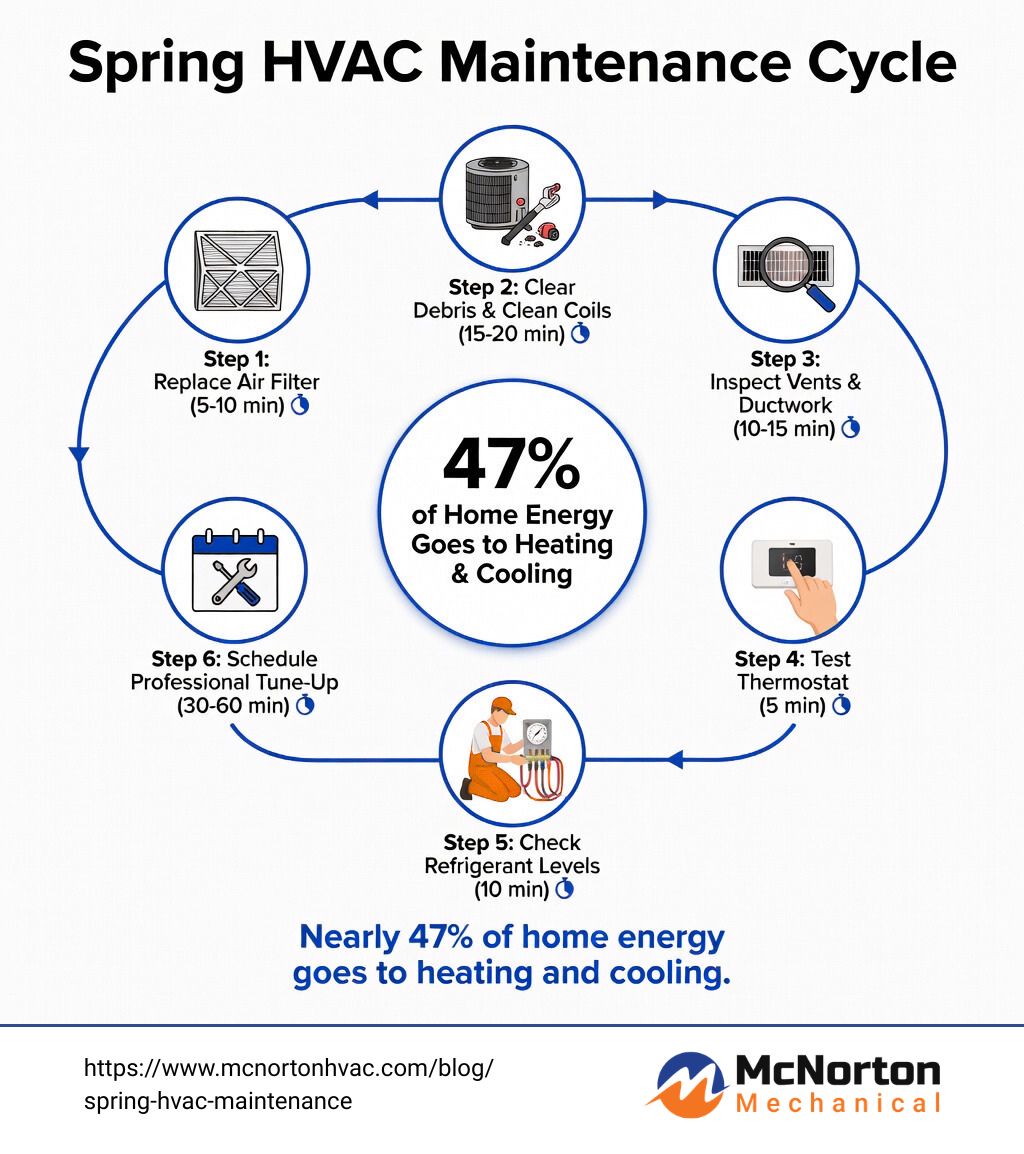
Your HVAC system — Heating, Ventilation, and Air Conditioning — is responsible for nearly 47% of your home’s total energy use. Skipping spring maintenance means your system heads into the hottest months already stressed from a full winter of heating. That is a recipe for breakdowns, higher energy bills, and poor indoor air quality right when you need comfort most.
The good news? Most of the key tasks can be done in under an hour.
Here is a quick overview of the core steps:
- Replace or clean air filters (every 30–90 days)
- Clear debris around the outdoor unit (keep a 2-foot clearance)
- Check vents and ductwork for blockages or leaks
- Test your thermostat and consider a smart upgrade
- Look for signs of low refrigerant (frost on lines, rising bills)
- Schedule a professional tune-up before peak cooling season
McNorton Mechanical has decades of hands-on HVAC experience serving homeowners along Florida’s Gulf Coast, I have seen how a simple spring HVAC maintenance routine prevents the majority of costly summer breakdowns. Let us walk through exactly what to do — step by step.
Essential Steps for Spring HVAC Maintenance
When the azaleas start blooming in Pensacola and the humidity begins its slow climb, it is my signal that Spring HVAC Maintenance season has arrived. I often tell my clients that treating your HVAC system well in the spring is like giving it a glass of water before a marathon.
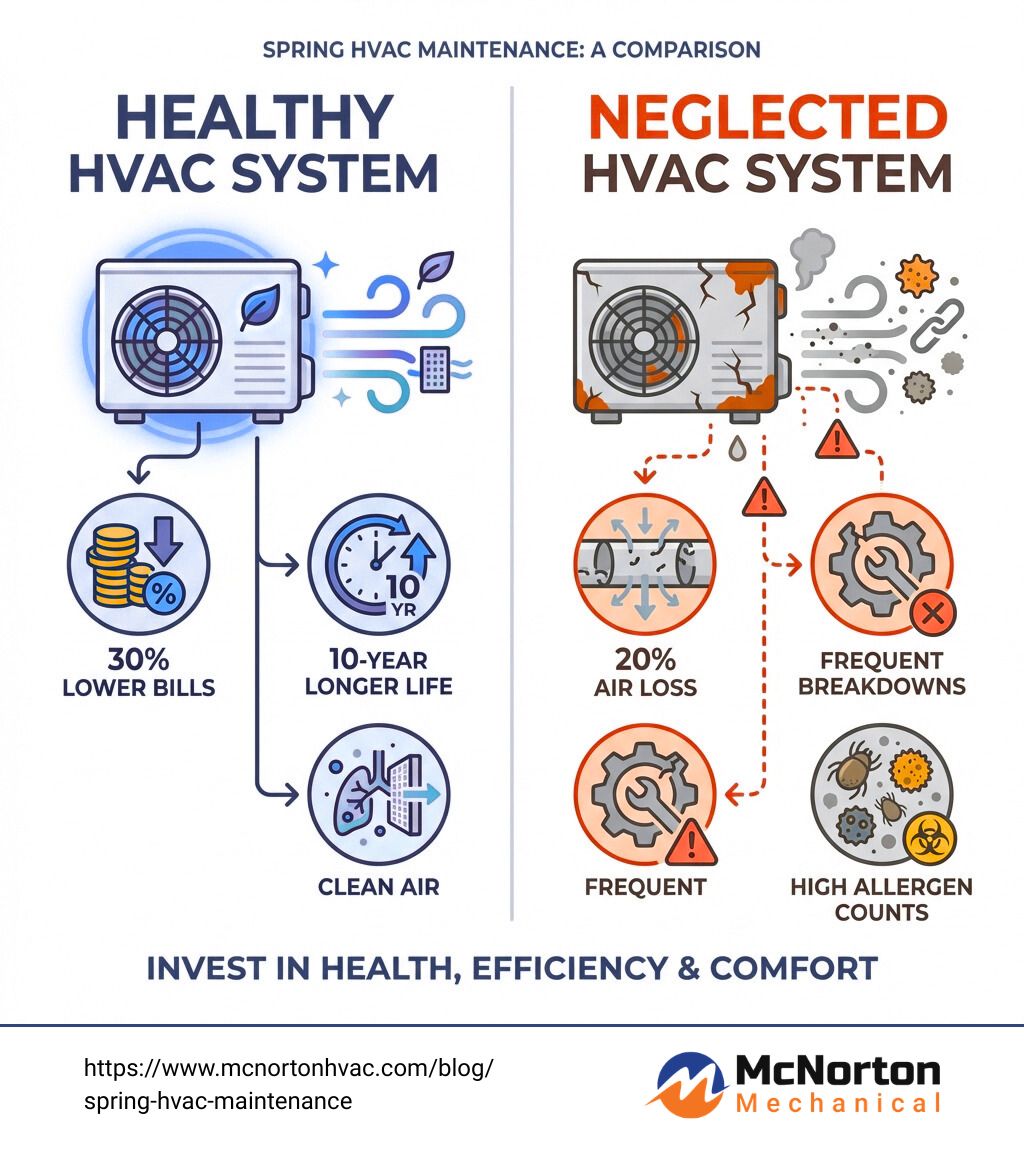
By performing basic maintenance, you can reduce that energy usage by up to 30%. That is money back in your pocket. Furthermore, regular tune-ups can extend the life of your HVAC system by 5–10 years. If you want to dive deeper into how efficient products save you money, you can check out this research on energy-saving home products.
I have found that the best way to stay on top of these tasks without feeling overwhelmed is to join a home care plan. It automates the professional side of things so you only have to worry about the quick DIY tasks.
Quick Indoor Tasks for Spring HVAC Maintenance
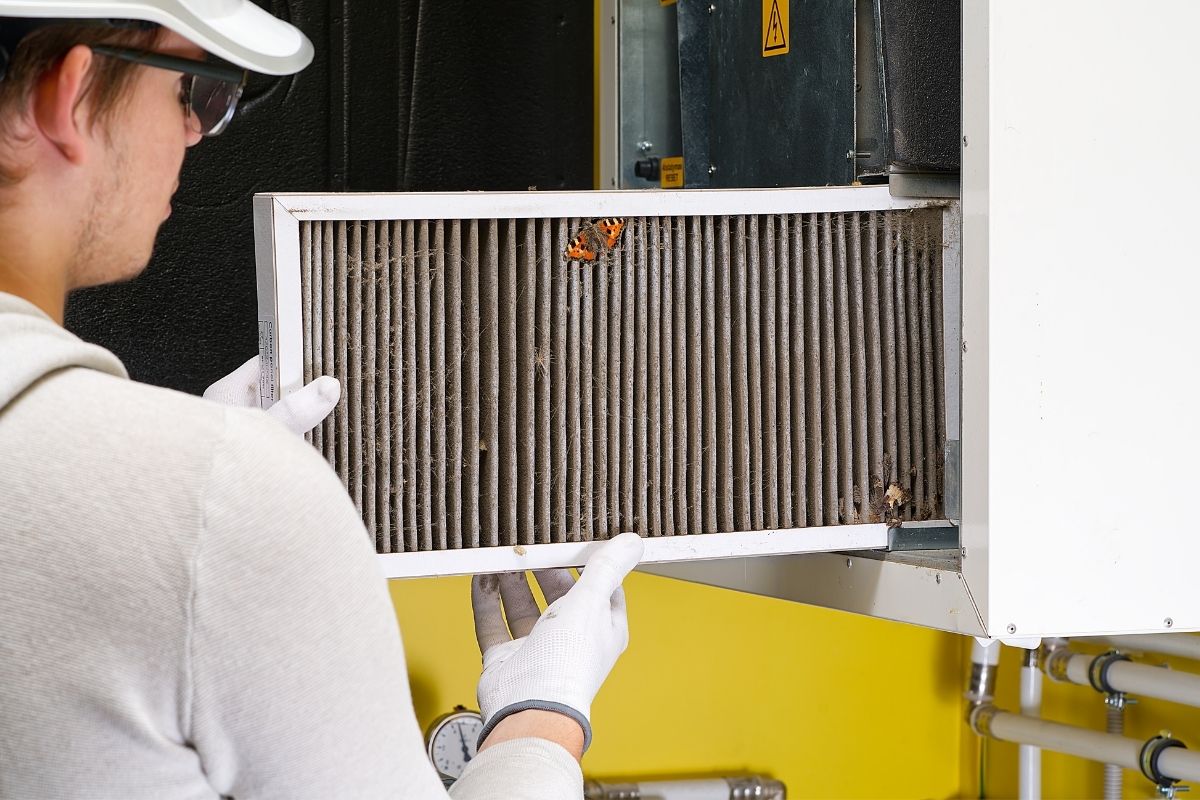
The first thing I do when I walk into a home for a spring checkup is look at the air filter. If your filter looks like it just came back from a mud-wrestling competition, it is definitely time for a change!
- Frequency: You should inspect your filter monthly and replace or clean it every 30–90 days. If you have pets or live in a high-pollen area like Milton or Gulf Breeze, every 30 days is safer.
- The Allergy Factor: More than 24 million Americans suffer from seasonal hay fever. Using a high-quality filter, such as one with a MERV 13 rating, can help trap microscopic pollutants. Some air purification systems can even eliminate up to 99.9% of allergens and viruses from your indoor air.
- Thermostat Testing: Switch your thermostat from “Heat” to “Cool” and set it a few degrees below the current room temperature. Listen for the system to kick on. If it struggles, it might be time for a smart thermostat upgrade. Smart thermostats learn your schedule and can significantly lower your bills during our sweltering Florida summers.
To help you decide what you can handle and what you should leave to me, I’ve put together this quick comparison table:
| Task | DIY Friendly? | Time Estimate | Why It Matters |
|---|---|---|---|
| Replace Air Filter | Yes | 5 Minutes | Improves airflow and IAQ |
| Clear Outdoor Debris | Yes | 15 Minutes | Prevents system overheating |
| Test Thermostat | Yes | 5 Minutes | Ensures system communication |
| Clean Evaporator Coils | No | 45 Minutes | Requires specialized chemicals |
| Check Refrigerant Levels | No | 20 Minutes | Requires EPA certification |
| Tighten Electrical | No | 30 Minutes | High risk of electrical shock |
Outdoor Unit Care and Spring HVAC Maintenance
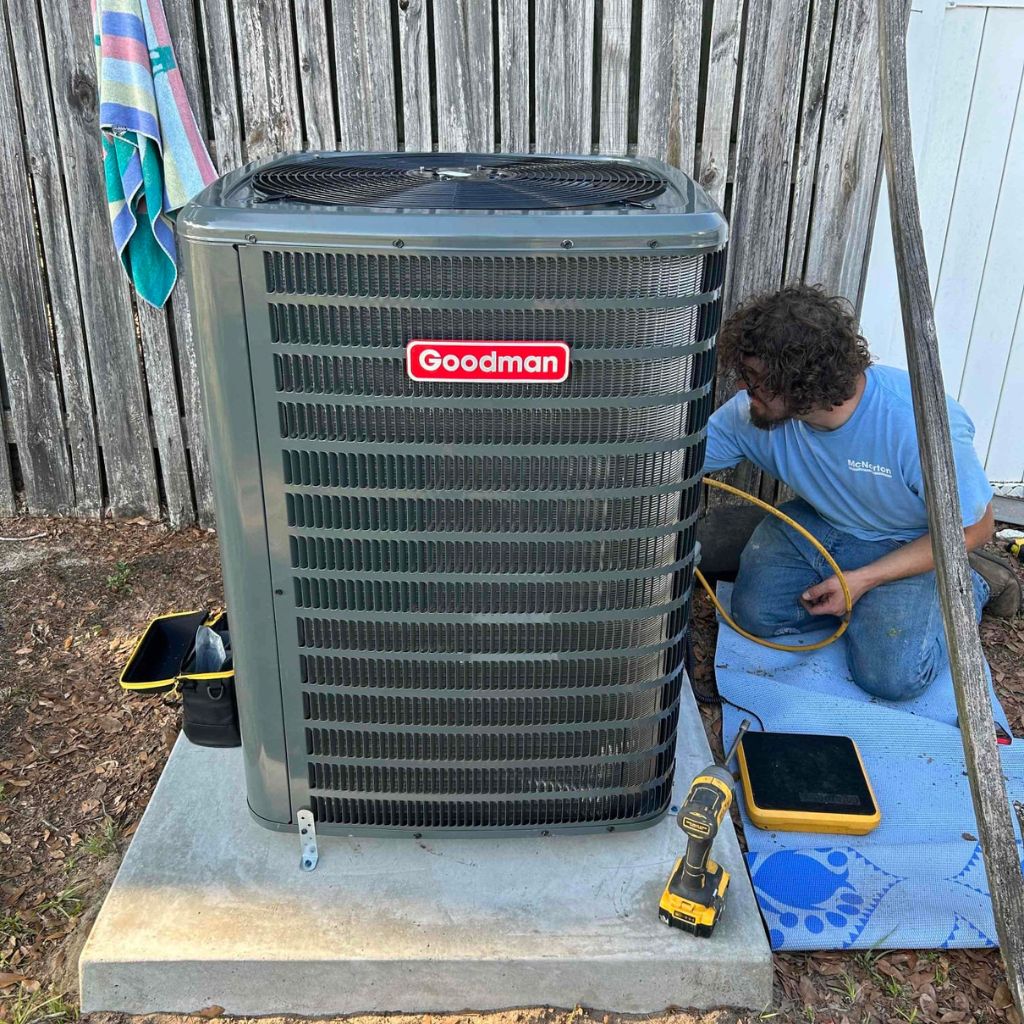
Your outdoor condenser unit has been sitting through winter storms and spring pollen dumps. It needs some breathing room! I recommend a “2-foot rule”: keep at least two feet of clear space around the entire unit.
- Safety First: Always turn off the power at the outdoor disconnect switch before touching the unit.
- Clear the Area: Remove leaves, twigs, and overgrown grass. In Northwest Florida, pine needles are a common culprit for clogging up fins.
- Gently Clean the Coils: Use a garden hose (not a pressure washer!) to rinse away dust and pollen from the outside in. High pressure can bend the delicate aluminum fins.
- Straighten the Fins: If you see bent fins, you can use a “fin comb” to gently straighten them. This ensures maximum airflow.
- Check for Level: If the unit has shifted and is no longer level, the oil in the compressor might not reach all components, leading to friction and premature failure.
Inspecting Vents and Ductwork for Efficiency
Did you know that in the average home, around 20-30% of conditioned air escapes through cracks and gaps in the ductwork? That is like paying for a whole extra room of cooling that you never actually feel.
When performing your Spring HVAC Maintenance, walk through every room and check the following:
- Blockages: Ensure furniture, curtains, or rugs aren’t covering supply vents or return intakes.
- Dust and Pests: Look for excessive dust buildup or signs of “critters” that might have nested in the ducts over winter.
- Visible Leaks: If you have access to your attic or crawlspace, look for disconnected ducts. You can sometimes find leaks by feeling for air or using a smoke pencil.
Sealing and insulating these ducts can improve your system’s efficiency by 20% or more. If you notice your home isn’t cooling evenly, don’t wait. Learn more info on why to avoid repair delays to prevent a small leak from turning into a blown compressor.
When to Call a Professional for Repairs
While I love seeing homeowners take initiative, a lot of HVAC problems still come down to missed maintenance or small issues that snowball. And some tasks simply aren’t safe (or smart) to DIY, like refrigerant work or electrical components. When in doubt, it’s worth calling a licensed pro before a minor problem turns into an expensive breakdown.
- Refrigerant Issues: If you see frost on the copper lines or if the air coming out of the vents is lukewarm, you likely have a leak. Handling refrigerant requires special tools and licensing.
- Electrical Danger: Capacitors in your AC can store a lethal electrical charge even when the power is off. I have seen too many DIY “fixes” end in blown circuit boards or worse.
- Strange Noises: If your system is banging, screeching, or whistling, it’s a sign of mechanical failure. Ignoring these can lead to heating system failures or total AC meltdowns.
Conclusion
Taking an hour this weekend to perform your Spring HVAC Maintenance is the best gift you can give your home. You’ll breathe easier, save money, and avoid that dreaded “no-AC” emergency in the middle of a July heatwave.
Final Thoughts on Seasonal Comfort
At McNorton HVAC, we have spent over 65 years keeping our neighbors in Pensacola, Gulf Breeze, and Crestview comfortable. We know the local climate—the salt air, the humidity, and the sudden spring storms—and we know exactly what your system needs to survive it.
Whether you need a quick tune-up or a major repair, we offer licensed 24/7 availability and special financing to ensure your safety and comfort are never compromised. We serve a wide range of areas across Florida and Alabama, from Navarre to Fairhope. You can find more info about our service areas on our website.
Don’t let the summer heat catch you off guard. Start your Spring HVAC Maintenance today, and if you find something that doesn’t look right, give me a call!
Frequently Asked Questions
When is the best time to perform spring maintenance?
Ideally, in early spring (March or April) before the first major heat spike. This gives you time to fix any issues before technicians get busy with emergency calls.
How often should I really change my filter?
Every 30–90 days. If you live in a dusty area or have shedding pets, check it every 30 days. If it’s gray or fuzzy, swap it out!
What are the signs of low refrigerant?
Common signs include ice on the indoor or outdoor coils, a hissing sound, and an AC that runs constantly without actually lowering the temperature.
How does maintenance improve indoor air quality?
By cleaning coils and changing filters, you remove the “food source” for mold and bacteria and prevent dust and pollen from circulating through your home.
What do those weird noises mean?
Here is a quick guide:
- Banging: Usually a loose part like a connecting rod or crankshaft.
- Screeching: Often a belt or motor bearing issue.
- Hissing: Typically a refrigerant leak.
- Clicking: Could be an electrical issue or a failing relay.
Latest Articles

Don’t Sweat It: Why McNorton is Top-Rated Emergency HVAC Services in Pensacola

Shocking Truth: The Real Cost to Replace Your Electrical Panel