

Don’t Sweat It: Why McNorton is Top-Rated Emergency HVAC Services in Pensacola
Why does an HVAC breakdown in Pensacola feel urgent so fast?
In this climate, a dead AC or heater can quickly turn into more than a comfort problem. Heat, humidity, poor airflow, strange smells, or sudden cold can put stress on your family, your home, and even your peace of mind. If your system stops working, do not wait.
How can you get help without adding more stress to an already bad situation? That is where McNorton comes in. When you need Pensacola emergency HVAC service, McNorton is ready to help restore comfort, protect your home, and get your system back on track as quickly as possible.
Quick Answer: What You Need to Know About Emergency HVAC in Pensacola:
- What qualifies as an emergency: System won’t turn on, burning smells, no airflow, water leaks, loud grinding noises, or extreme temperature failures
- Expected response time: Most providers aim for 1-2 hours during business hours, longer after-hours depending on call volume
- Average costs: Simple repairs run $150-$300, complex repairs $300-$800, major component replacements $1,500-$3,000+ (plus after-hours fees)
- 24/7 availability: Look for companies offering true round-the-clock service with real technicians answering calls
- Key provider qualities: Licensed, insured, experienced with local climate challenges, upfront pricing, stocked service trucks
When your HVAC system quits, you can’t wait days for service. In Florida’s heat, a broken air conditioner isn’t just uncomfortable—it’s a health risk, especially for children, seniors, and pets. During those rare Pensacola cold snaps (when temperatures can swing from the 70s to the 20s in days), a failed heating system is equally urgent.
The truth is, HVAC emergencies happen more often in Pensacola than in many other parts of the country. High humidity accelerates corrosion and bearing wear. Salt air from the Gulf damages outdoor components. Sudden temperature changes stress systems designed to run consistently. Historic homes present unique challenges with older ductwork and unusual configurations.
I’m Derrick Rushnell, and through my work with McNorton Mechanical, I’ve responded to countless Pensacola emergency HVAC calls over the years, from frozen heat pumps on Navy Boulevard to corroded compressors near Pensacola Beach. I’ve seen how fast, expert service can restore comfort and prevent costly secondary damage.
What Qualifies as an HVAC Emergency? (Signs You Need Help NOW)
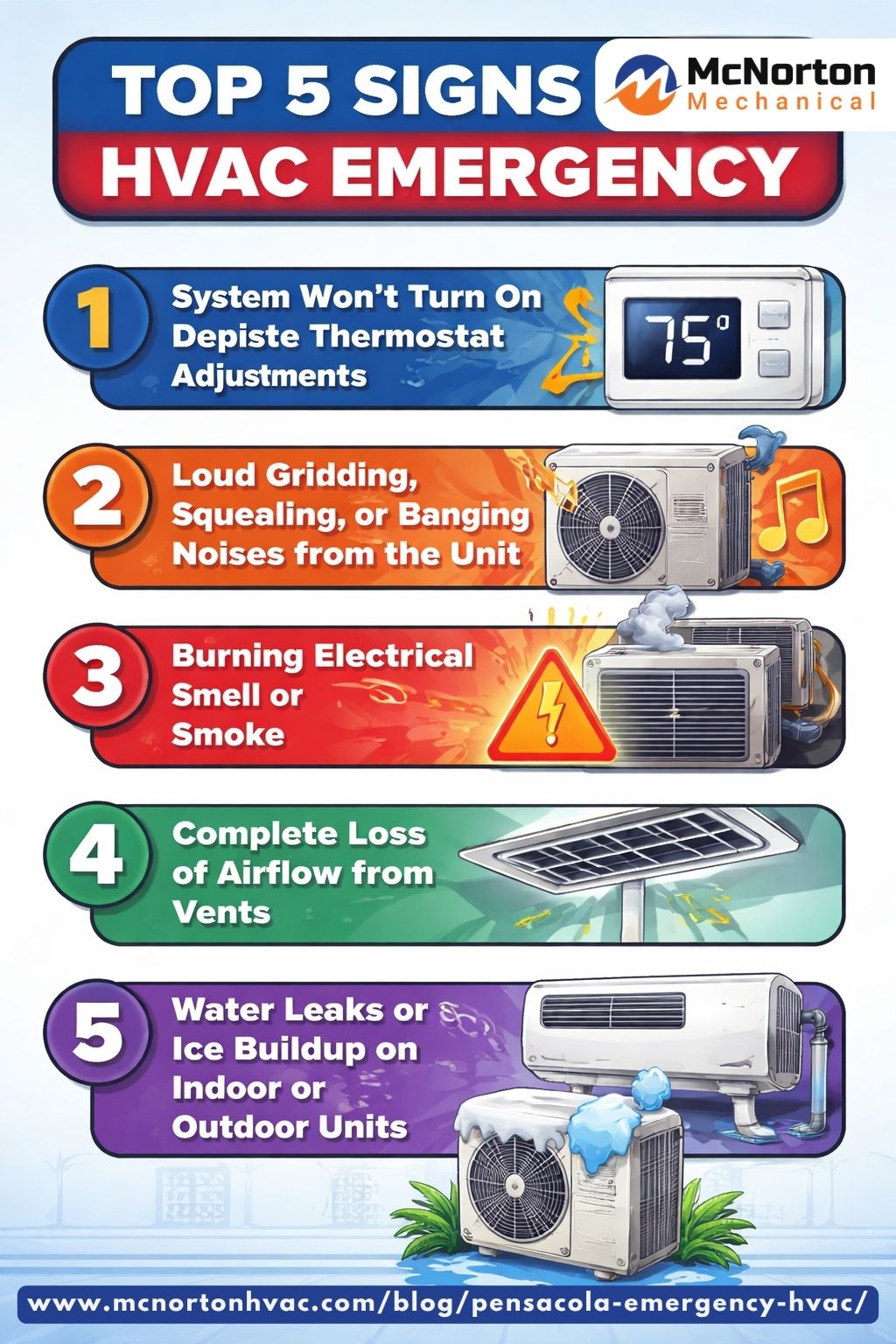
When your heating or cooling system decides to take an unscheduled vacation, it’s more than just an inconvenience—it can quickly become a crisis. We treat it as such because we understand the urgency. So, what exactly qualifies as an Pensacola emergency HVAC situation? Here are the critical signs that tell you it’s time to call us, pronto:
- System Won’t Turn On: This is the big one. If your AC or heater simply refuses to kick into gear, especially during extreme temperatures, it’s a clear emergency. No power, no comfort, no safety.
- Loud Grinding Noises: While all HVAC systems make some noise, a sudden, loud grinding sound often indicates a serious mechanical issue, like a failing motor bearing. Ignoring this can lead to total system failure and more expensive repairs.
- Squealing Sounds: High-pitched squealing can point to a worn-out belt in the blower motor. While not always an immediate breakdown, it’s a precursor to failure and should be addressed quickly to prevent further damage.
- Burning Smells or Electrical Odors: This is a red-flag warning! If you detect a burning smell, especially like burning plastic or electrical wiring, shut down your system immediately and call us. This could indicate an electrical short, which is a fire hazard.
- No Airflow from Vents: If your unit is running but no air, or very little air, is coming out of your vents, you have a major problem. This could be a blower motor issue, severe duct blockage, or a frozen coil.
- Water Leaks: Puddles around your indoor unit are never a good sign. This often means a clogged condensate drain line or a frozen evaporator coil. Left unaddressed, water leaks can cause significant property damage, including mold growth and structural issues.
- Ice Buildup on Coils: If your indoor or outdoor unit’s coils are covered in ice, it usually points to poor airflow, low refrigerant, or a malfunctioning defrost system. This prevents your system from cooling effectively and can damage the compressor.
- Inconsistent Temperatures: While less dramatic, if your system is cycling constantly but your home’s temperature is wildly inconsistent, it’s struggling. This can be a sign of a failing thermostat, refrigerant leak, or an undersized system working overtime.
Any of these issues can compromise your comfort, health, and even the structural integrity of your home. Delaying repairs can escalate the problem, leading to more extensive damage and higher costs. Our team at McNorton Mechanical is ready to respond to these critical issues, ensuring your safety and restoring your comfort swiftly. For more information on our services, visit our Emergency HVAC Repairs page.
Pensacola’s Climate vs. Your HVAC: Why Emergencies Happen Here
Living in Pensacola means enjoying beautiful beaches and warm weather, but it also means your HVAC system works harder than most. Our unique climate poses specific challenges that can lead to unexpected breakdowns and Pensacola emergency HVAC situations.
- High Humidity: Pensacola’s high humidity levels are a constant foe for HVAC systems. This moisture in the air accelerates the wear and tear on components like bearings and electrical connections. It also creates a breeding ground for mold and mildew within your ducts and coils, impacting indoor air quality. In winter, this humidity can even cause heat pumps to freeze up if their defrost systems aren’t working perfectly.
- Salt Air Corrosion: Being so close to the Gulf and our local bays means our air is often laden with salt. This salt air is highly corrosive, aggressively eating away at the metal components of outdoor HVAC units. Condenser coils, electrical connections, and even the cabinet itself can corrode faster here than in inland areas, leading to leaks, electrical failures, and costly repairs.
- Sudden Temperature Swings: While our winters are generally mild, Pensacola can experience dramatic temperature drops. We’ve seen temperatures swing from the comfortable 70s to the chilly 20s in just a few days. These rapid changes put immense stress on heating systems, forcing them to switch between modes and work overtime, which can expose weaknesses and trigger emergencies.
- Constant Strain: Unlike many regions where HVAC systems get a seasonal break, our units in Pensacola often run almost year-round. This constant operation, battling heat and humidity for most of the year, means components simply wear out faster.
These environmental factors contribute to common HVAC failures we see in our service areas across Florida and Alabama, including Pensacola, Gulf Breeze, Ferry Pass, and Cantonment:
- Clogged Drain Lines: High humidity leads to more condensation, which can quickly clog condensate drain lines with algae and sludge, causing water leaks.
- Corroded Coils: As mentioned, salt air and humidity can corrode both evaporator and condenser coils, leading to refrigerant leaks and reduced efficiency.
- Blower Motor Failure: Constant use in humid conditions can accelerate bearing wear in blower motors, resulting in unusual noises or a complete loss of airflow.
We understand these local challenges intimately. Our experience serving areas from Escambia County to Baldwin County for over 65 years means we know what your system is up against. Whether it’s an AC Repair Pensacola, FL to combat the summer heat or Heating Repair Pensacola, FL during a cold snap, we’re equipped to handle the specific demands of our coastal climate.
Your Guide to Choosing a Pensacola Emergency HVAC Provider
When your HVAC system fails, the last thing you want to do is scramble to find a reliable service provider. Making an informed choice before an emergency strikes can save you stress, time, and money. Here’s what we believe you should look for in a top-tier Pensacola emergency HVAC provider.
Key Qualities of a Top-Tier Emergency Service
Choosing the right partner for your HVAC needs, especially in an emergency, is crucial. We pride ourselves on embodying these essential qualities:
- 24/7 Availability: An HVAC emergency doesn’t care if it’s 3 AM on a holiday. We offer true 24/7 emergency service. When you call us, you’ll speak to a real person who understands your situation, not an answering machine. This means we’re always ready to dispatch a technician when you need us most.
- Fast Response Time: We know that every minute counts when your comfort and safety are on the line. While response times can vary depending on location and call volume, we prioritize emergency calls and strive to get to you as quickly as possible, typically within 1-2 hours during business hours for homes without heat or AC. Our wide Service Areas across Florida (Pensacola, Gulf Breeze, Cantonment, Navarre, Pace, Milton, etc.) and Alabama (Foley, Fairhope, Daphne, Gulf Shores, etc.) allow us to respond efficiently to our communities.
- Licensed and Insured: This is non-negotiable. Our technicians are fully licensed and insured, providing you with peace of mind that the work is being done correctly and that you’re protected against any unforeseen issues.
- 65+ Years of Experience: Our long history, spanning over 65 years, speaks volumes about our expertise and reliability. We’ve seen it all, fixed it all, and learned how to handle the unique HVAC challenges of the Gulf Coast. This deep experience ensures we can diagnose and repair even the most complex problems efficiently.
- Upfront Pricing: Nobody likes surprises, especially when it comes to emergency repairs. We believe in transparency. Our technicians will clearly explain the problem, present your options, and provide upfront pricing before any work begins, so you know exactly what to expect.
- Positive Local Reviews: A company’s reputation in the community is a strong indicator of its service quality. We are proud of the trust we’ve built with our neighbors in Pensacola and surrounding areas.
- Well-Stocked Service Vehicles: To ensure we can fix your problem on the first visit, our service vehicles are fully stocked with common parts that frequently fail in our Florida climate. This reduces delays and gets your system up and running faster.
Understanding the Cost of Pensacola Emergency HVAC Repairs
It’s natural to wonder about the cost when faced with an unexpected Pensacola emergency HVAC repair. Several factors influence the final price:
- Time of Day/After-Hours Fees: Emergency calls outside of standard business hours (nights, weekends, holidays) typically incur higher rates due to the immediate availability required from our technicians.
- Repair Complexity: A simple fix, like replacing a capacitor or thermostat, will naturally cost less than a complex repair, such as addressing a significant refrigerant leak or replacing a major component.
- Parts Required: The cost of replacement parts varies widely. Common, inexpensive parts will keep the cost down, while specialized or larger components will increase it.
- System Accessibility: If your HVAC unit is in a hard-to-reach location, requiring extra time or specialized equipment, this can also impact the labor cost.
While simple repairs might range from a few hundred dollars ($150-$300+), more complex issues like fixing refrigerant leaks or replacing fan motors typically fall between $300-$800+. Major component replacements, such as a compressor, can range from $1,500-$3,000+. We always provide clear pricing communication before starting any work, so you’re never left guessing. We also offer Special Offers that might help alleviate the burden of an unexpected repair.

The $5,000 Rule: When to Repair vs. Replace Your System
When faced with an expensive Pensacola emergency HVAC repair, you might wonder if it’s better to repair your existing system or invest in a new one. We often use a helpful guideline known as “the $5,000 rule” to assist homeowners in making this crucial decision.
The $5,000 Rule: Multiply the cost of the repair by the age of your system (in years). If the resulting number exceeds $5,000, replacement is often the smarter financial decision.
Here’s a comparison to help illustrate when to repair versus when to consider replacement:
| Factor | Repair Usually Makes Sense When… | Replacement Often Makes More Sense When… |
|---|---|---|
| Age of System | AC is under 10 years old, or heater is under 15 years old | AC or heater is 15+ years old and nearing the end of its expected lifespan |
| Current Condition | System still cools/heats well with only minor issues | System is worn out, struggles to keep up, or has major component failures |
| Energy Efficiency | Utility bills are in a normal range and efficiency ratings are still decent | Energy bills keep climbing and the system has noticeably lower efficiency than newer models |
| Frequency of Breakdowns | Breakdowns are rare and repairs are inexpensive | You are calling for service multiple times a year or facing repeated major repairs |
| Cost of Repair | Repair is less than 50% of the cost of a new system | Repair is more than 50% of replacement cost, or the “$5,000 Rule” says replace (age of unit × repair cost is over $5,000) |
| Refrigerant Type | Uses modern refrigerants that are easy to source and more affordable | Uses R-22 or other phased-out refrigerants that are costly and hard to find |
We’ll provide an honest analysis of your system’s condition, efficiency, and long-term costs. Our goal is to help you make the best decision for your home and budget, with zero sales pressure.
How to Prevent an HVAC Crisis with Proactive Maintenance
While we’re always here for your Pensacola emergency HVAC needs, we’d much rather help you avoid them! The best emergency is one that never happens. Proactive maintenance is your HVAC system’s best friend, especially in our challenging Pensacola climate. Think of it as a regular check-up for your home’s most vital comfort system.
Here are some preventative measures you can take, along with how our professional services can make a difference:
- Change Air Filters Regularly: This is the easiest and most crucial DIY task. A clogged air filter restricts airflow, forcing your system to work harder, which wastes energy and can lead to breakdowns. We recommend checking your filter monthly and changing it every 1-3 months, depending on your system type, household size, and whether you have pets.
- Keep Your Outdoor Unit Clean: The condenser unit outside can accumulate dirt, leaves, and debris, especially after a storm. This debris can block airflow and reduce efficiency. Gently rinse the unit with a garden hose (making sure to turn off the power first!) to keep the coils clean. However, a professional cleaning can reach deeper into the fins without causing damage.
- Check Your Condensate Drain Line: In our humid environment, this line can easily clog with algae. You can pour a cup of distilled vinegar down the line a few times a year to help prevent blockages. If you notice standing water or a musty smell, it’s time for a professional to clear it.
- Schedule Routine Professional Service: This is the big one. While DIY tasks are helpful, they don’t replace the thorough inspection and tune-up a professional can provide. Our Home Care Plan offers annual inspections that catch small problems before they escalate into major Pensacola emergency HVAC situations. During these visits, we’ll:
- Inspect electrical connections and components.
- Check refrigerant levels and look for leaks.
- Clean coils (evaporator and condenser) for optimal efficiency.
- Lubricate moving parts to reduce wear and tear.
- Calibrate your thermostat for accurate temperature control.
- Inspect ductwork for leaks or blockages.
Regular maintenance can improve your system’s efficiency by 15-20%, extend its lifespan, and significantly reduce the likelihood of unexpected breakdowns. According to the U.S. Department of Energy, a dirty, clogged filter can increase your AC’s energy consumption by up to 15%. It’s a small investment that pays off in comfort, energy savings, and peace of mind.
Frequently Asked Questions about Pensacola Emergency HVAC
We know you have questions, especially when faced with an unexpected HVAC problem. Here are some of the most common inquiries we receive regarding Pensacola emergency HVAC services. For more detailed answers, please visit our FAQs page.
How quickly can I expect a response for an emergency call?
When your comfort system fails, we understand that time is of the essence. Our commitment is to provide prompt and reliable service. We offer 24/7 emergency service across all our service areas, from Pensacola to Foley. Response times can vary depending on your exact location and the current call volume, but we always prioritize homes without heating or cooling, especially during extreme weather conditions. During business hours, we typically aim to respond within 1-2 hours. After hours, depending on demand, it might take a bit longer, but rest assured, we have technicians on call. When you call us, you’ll speak with a live person ready to help, not an answering service, ensuring your emergency is handled with the urgency it deserves.
Is a broken AC in Florida considered a true emergency?
Absolutely, yes! In Florida, especially in Pensacola, a broken AC is definitely considered an emergency. Our summer heat and humidity are more than just uncomfortable; they can pose significant health risks. If your AC stops working during hot months, indoor temperatures can climb rapidly, creating dangerous conditions for vulnerable individuals like young children, the elderly, and pets. Dehydration, heatstroke, and respiratory issues can quickly become concerns. Beyond health, the high humidity can also cause property damage, leading to mold growth, warping of wood, and damage to electronics. So, if your AC isn’t cooling, blowing air, or simply won’t turn on, don’t hesitate—call us immediately. Your comfort and safety are our top priority.
Does homeowners’ insurance cover HVAC emergencies?
This is a great question, and the answer is: sometimes. Homeowners’ insurance policies typically cover damage that is sudden and accidental. For example, if your HVAC system is damaged by a lightning strike, a fallen tree, or an electrical fire, your policy might cover the repair or replacement costs. However, most policies do not cover breakdowns due to normal wear and tear, lack of maintenance, or age-related failures. Gradual damage, like a slow refrigerant leak that has been going on for months, is also usually not covered. We always recommend checking your specific policy or contacting your insurance provider to understand your coverage limits and exclusions before an emergency arises.
Restoring Your Comfort in Pensacola
Navigating an Pensacola emergency HVAC situation can be stressful, but with the right partner, you don’t have to sweat it. We’ve seen how quickly a minor issue can escalate into a major crisis, especially with our unique climate challenges. From the relentless summer heat to those unexpected winter cold snaps, your HVAC system is vital for your home’s comfort and safety.
That’s why having a reliable, experienced, and responsive team like McNorton Mechanical on your side is so important. With over 65 years of experience serving Pensacola, Gulf Breeze, and the wider Escambia and Baldwin County regions, we’ve built a reputation for guaranteed comfort and safety. Our licensed technicians are available 24/7, ready to tackle any HVAC emergency with expertise and efficiency.
When you need Pensacola emergency HVAC service, you need help fast and from a team you can trust. McNorton is here with prompt, professional support to restore your comfort and protect your home. If your system stops working, makes alarming noises, or shows signs of a serious problem, do not wait. Contact Us now to get emergency service.
Latest Articles
Shocking Truth: The Real Cost to Replace Your Electrical Panel
Keeping Your Cool: Essential Air and Heat Repair Insights