

Air Conditioning Units & Heat Pumps: What’s the Difference and Which is Right for You?
Why Understanding Air Conditioning Units & Heat Pumps Matters for Your Home
Air conditioning units heat pumps are often misunderstood, but knowing the difference can save you money and provide year-round comfort. If you’re replacing an aging system in Pensacola, a heat pump could provide both heating and cooling for a similar investment as a cooling-only unit.
Key Differences at a Glance:
- Standard Air Conditioner: Cools your home by moving heat outdoors.
- Heat Pump: Cools and heats by reversing its refrigeration cycle.
- Cost: Heat pumps cost only slightly more than equivalent AC units.
- Efficiency: Heat pumps can be up to 300% efficient, far surpassing the best furnaces (98%).
- Climate: Modern heat pumps work effectively down to -15°F, making them viable in most U.S. climates.
The bottom line: A heat pump is an air conditioner that can also run in reverse to heat your home. In cooling mode, it removes heat from inside and pumps it outdoors. In heating mode, it extracts warmth from the outside air and brings it inside. This dual functionality makes heat pumps a popular choice for homeowners looking to reduce energy bills and simplify their HVAC systems.
I’m Derrick Rushnell of McNorton Mechanical. With decades of experience helping Pensacola homeowners with their HVAC decisions, I’ve seen how choosing between air conditioning units heat pumps and traditional systems can transform a home’s comfort and energy costs, especially in Florida’s climate.
What is a Heat Pump and How Does It Compare to an Air Conditioner?
At its core, a heat pump is an HVAC system that provides both heating and cooling. Unlike a furnace that creates heat by burning fuel, a heat pump simply moves heat using a process called the refrigeration cycle. This makes it incredibly efficient.
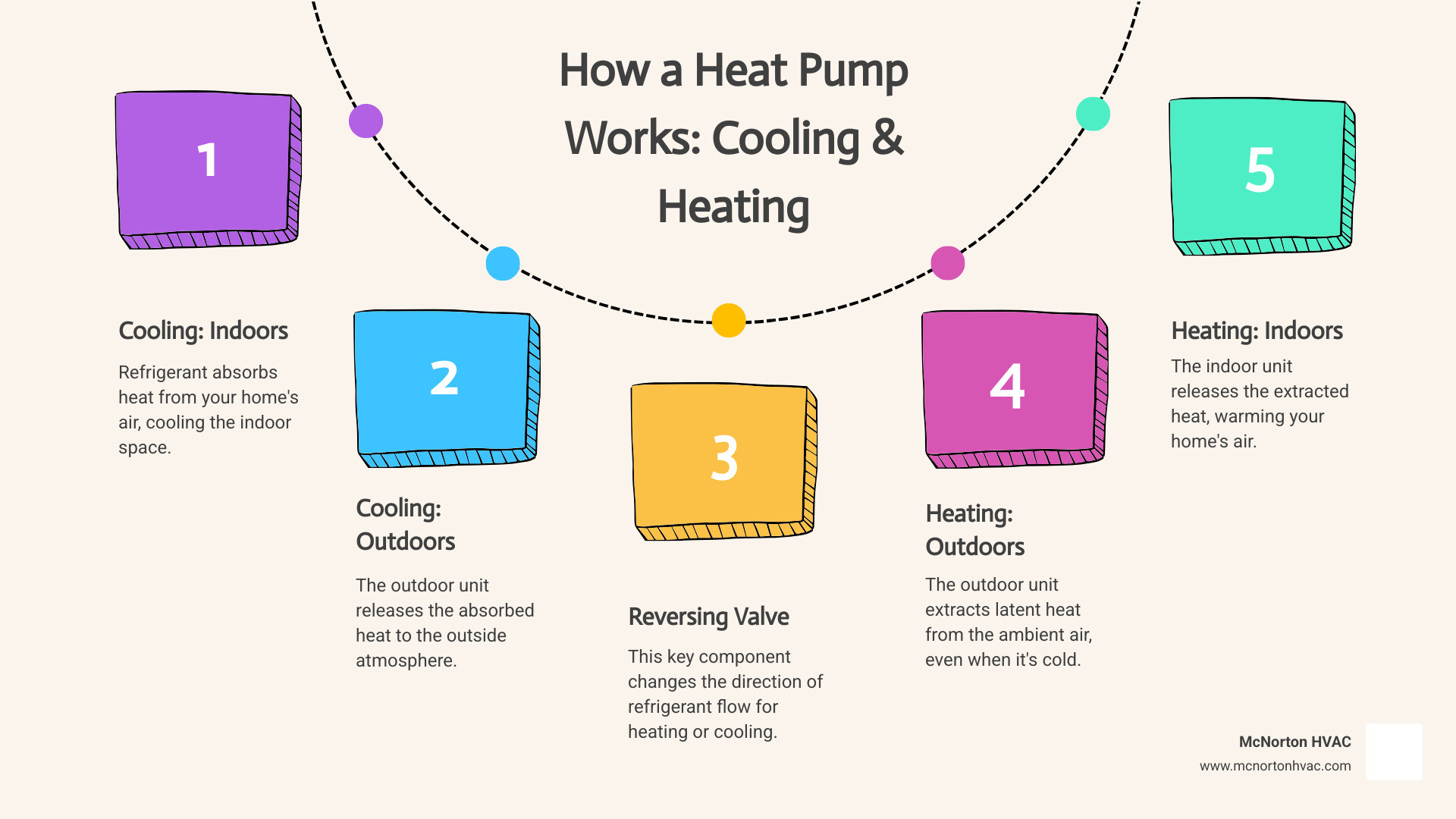
While a standard air conditioner only cools, a heat pump’s versatility comes from a reversing valve, which allows it to switch between heating and cooling modes. For homeowners in the Pensacola, FL, and Baldwin County, AL, areas, this dual capability is a game-changer, providing reliable comfort for our warm summers and cooler winter days. If you’re considering a new AC system, exploring heat pump options is a smart move. Learn more about our AC installation services. The U.S. Department of Energy also provides excellent resources on Heat Pump Systems.
How a Heat Pump Works in Cooling and Heating Modes
A heat pump’s magic lies in its ability to reverse its function using a special refrigerant fluid.
Cooling Mode Operation:
In cooling mode, a heat pump works just like a standard air conditioner. Refrigerant absorbs heat from your indoor air and transfers it to the outdoor unit, which releases the heat outside. This leaves your home cool and dehumidified.
Heating Mode Operation:
When it’s cold, the reversing valve changes the refrigerant’s direction. The outdoor unit absorbs heat from the outside air (even on cold days) and moves it indoors. The indoor unit then releases this heat into your home, and a fan circulates the warm air.
In colder climates, heat pumps use a “defrost cycle” to melt ice on the outdoor coil. This is rarely a concern on the Florida and Alabama Gulf Coast, allowing for consistent performance.
Comparing Standard Air Conditioning Units & Heat Pumps
In cooling mode, a heat pump is identical to an air conditioner. The primary difference is its ability to also provide heat.
- Functionality: An air conditioner only cools. A heat pump is a two-in-one system that provides both cooling and heating.
- Upfront Cost: Heat pumps typically cost only a few hundred dollars more than an equivalent AC unit. This means you get a new heating system for a minimal additional investment.
- Long-Term Savings: Heat pumps are incredibly energy-efficient. An electric heat pump can be up to 300% efficient, delivering three units of heat for every one unit of electricity used. The most efficient furnaces top out at 98% efficiency, meaning a heat pump can lead to significantly lower utility bills.
For more insights, you can refer to an Air Conditioner Buying Guide.
The Core Components of a Heat Pump System
An HVAC system relies on several key components working together:
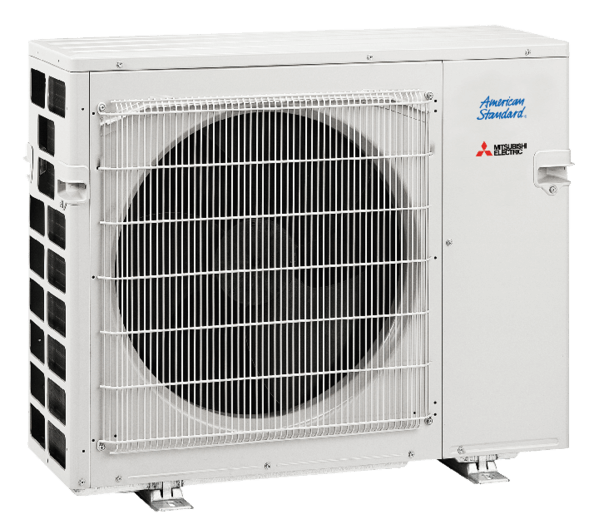
- Outdoor Unit (Condenser): The large box outside your home that houses the coil, compressor, and fan to release or absorb heat.
- Indoor Unit (Air Handler): Located inside, this unit contains a coil and fan to circulate conditioned air through your ductwork. We offer air handler repair services for this component.
- Refrigerant Lines: Insulated copper tubes that carry refrigerant between the indoor and outdoor units.
- Compressor: The “heart” of the system, located in the outdoor unit. It pressurizes and moves the refrigerant.
- Reversing Valve: The component unique to heat pumps that reverses the refrigerant flow to switch between heating and cooling.
- Expansion Valve: Regulates refrigerant flow into the indoor coil, allowing it to absorb heat efficiently.
Exploring the Main Types of Heat Pumps
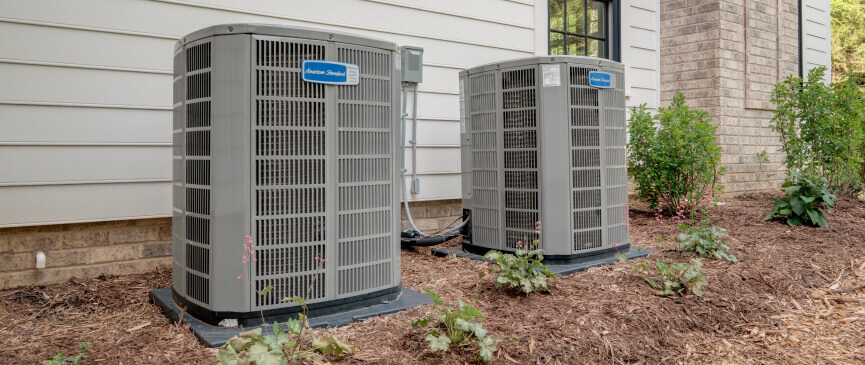
Heat pumps come in several types, distinguished by their heat source (air or ground) and whether they use ductwork.
Air-Source Heat Pumps
Air-source heat pumps (ASHPs) are the most common type in Florida and Alabama. They transfer heat between your house and the outside air. High-efficiency models can reduce heating electricity use by up to 75% compared to electric resistance heaters.
While traditional ASHPs are best for moderate climates, modern Cold Climate Heat Pumps (CCHPs) operate effectively in much colder conditions, with some models delivering heat below -13°F. This makes them a viable option for nearly any climate. For an energy-efficient solution that handles both heating and cooling, explore High-efficiency heat pumps or contact us for our expert heat pump services.
Geothermal (Ground-Source) Heat Pumps
Geothermal heat pumps (GHPs) use the stable temperature of the earth for heat exchange via a network of buried pipes (a ground loop). This makes them extremely efficient and consistent.
Comparing Air-Source vs. Geothermal Heat Pumps
| Feature | Air-Source Heat Pumps (ASHPs) | Geothermal Heat Pumps (GHPs) |
|---|---|---|
| Initial Cost | Generally lower | Significantly higher (can be several times an ASHP) |
| Efficiency | High, but efficiency decreases in extreme cold | Very high and consistent, due to stable ground temperatures |
| Lifespan | Unit: 15-20 years | Unit: 20-25 years; Ground Loop: 50-75 years |
| Installation | Simpler; outdoor unit and indoor unit | Complex; requires extensive digging/drilling for ground loop |
| Operating Costs | Lower than traditional systems, but higher than GHPs in heating | Lowest among all heating/cooling systems |
| Maintenance | Annual professional tune-ups, filter changes | Annual professional tune-ups, filter changes; ground loop is low-maintenance |
| Defrost Cycle | Required in colder temperatures | Not required |
While the initial cost of a GHP is higher, the significant long-term energy savings can offset the investment in 5 to 10 years. The ground loop itself can last over 50 years, making it a durable, sustainable choice. For more details, see the Department of Energy’s guide on Geothermal heat pumps (GHPs).
Ductless Mini-Split Heat Pumps
Ductless mini-split heat pumps are an excellent solution for homes without ductwork, for new additions, or for creating zoned heating and cooling. A system consists of an outdoor unit connected to one or more indoor units, each controlled independently.
A mini-split system consists of an outdoor compressor/condenser unit connected to one or more indoor air-handling units via a small conduit. This conduit houses the power cable, refrigerant tubing, and a condensate drain. Each indoor unit can be controlled independently, creating “zones” of comfort. This zone control allows you to heat or cool only the rooms you’re using, saving energy and providing personalized comfort.
Modern mini-splits use inverter technology, which allows the compressor to adjust its speed based on demand. Instead of cycling on and off, it runs at variable speeds, resulting in:
- Improved Energy Efficiency: Minimizes energy waste by matching output to demand.
- Stable Temperatures: Eliminates the temperature swings of traditional systems.
- Better Dehumidification: Continuous operation removes more moisture from the air, a huge benefit in Florida’s climate.
- Quieter Operation: Variable-speed compressors are much quieter.
Mini-splits are highly efficient and can deliver heat even in very cold temperatures. If you want to heat and cool an entire home without ducts or just a single room, we specialize in ductless mini-split installations.
Efficiency, Benefits, and Climate Considerations
Choosing an HVAC system is a smart investment in your home’s energy future. Heat pumps excel by offering significant energy savings and reducing your carbon footprint.
Decoding Efficiency Ratings: SEER, HSPF, and COP
When comparing air conditioning units heat pumps, you’ll see several efficiency ratings. Higher numbers always mean greater efficiency and lower utility bills.
- SEER (Seasonal Energy Efficiency Ratio): Measures cooling efficiency over a whole season. Higher SEER = lower cooling costs.
- HSPF (Heating Seasonal Performance Factor): Measures heating efficiency over a whole season. Higher HSPF = lower heating costs.
- COP (Coefficient of Performance): A direct measure of heating efficiency at a specific moment. A COP of 3 means the heat pump delivers 3 units of heat for every 1 unit of electricity consumed, illustrating how they can be “up to 300% efficient.”
As of 2023, new SEER2 and HSPF2 standards provide a more accurate reflection of real-world performance.
The Major Benefits of Heat Pumps
Choosing a heat pump in Florida or Alabama offers a compelling array of advantages:
- Exceptional Energy Efficiency: Heat pumps can achieve efficiencies of up to 300%, while the best gas furnaces max out at 98%. This means lower energy bills year-round.
- Lower Utility Bills: By moving heat instead of creating it, heat pumps use far less energy, directly reducing your monthly costs.
- Reduced Carbon Emissions: Heat pumps produce zero on-site carbon emissions, contributing to a significantly lower climate impact compared to furnaces.
- Single System for Year-Round Comfort: A heat pump provides both heating and cooling from one unit, simplifying your HVAC system.
- Improved Indoor Air Quality: Many heat pumps are excellent at dehumidifying your home, a major plus in our humid climate.
- Quiet Operation: Modern heat pumps, especially variable-speed models, operate very quietly.
Are Heat Pumps Suitable for Colder Climates?
The old idea that heat pumps don’t work in the cold is outdated. Modern heat pumps are remarkably capable in chilly conditions.
Today’s superefficient models can deliver heat down to -15 degrees Fahrenheit, and they can use electric resistance backup for even colder temperatures. This makes them viable in all U.S. climates.
For areas with extreme cold, specialized solutions exist:
- Cold Climate Heat Pumps (CCHPs): These are designed to operate efficiently in very low temperatures, some providing heat below -13°F.
- Dual-Fuel or Hybrid Systems: This popular solution pairs an electric heat pump with a gas furnace. The heat pump runs during milder weather for maximum efficiency, and the furnace takes over when temperatures drop significantly. This ensures optimal performance and comfort in any weather.
For most homeowners in Pensacola and the surrounding areas, a standard high-efficiency heat pump is more than enough for year-round comfort.
Your Guide to Choosing and Owning a Heat Pump
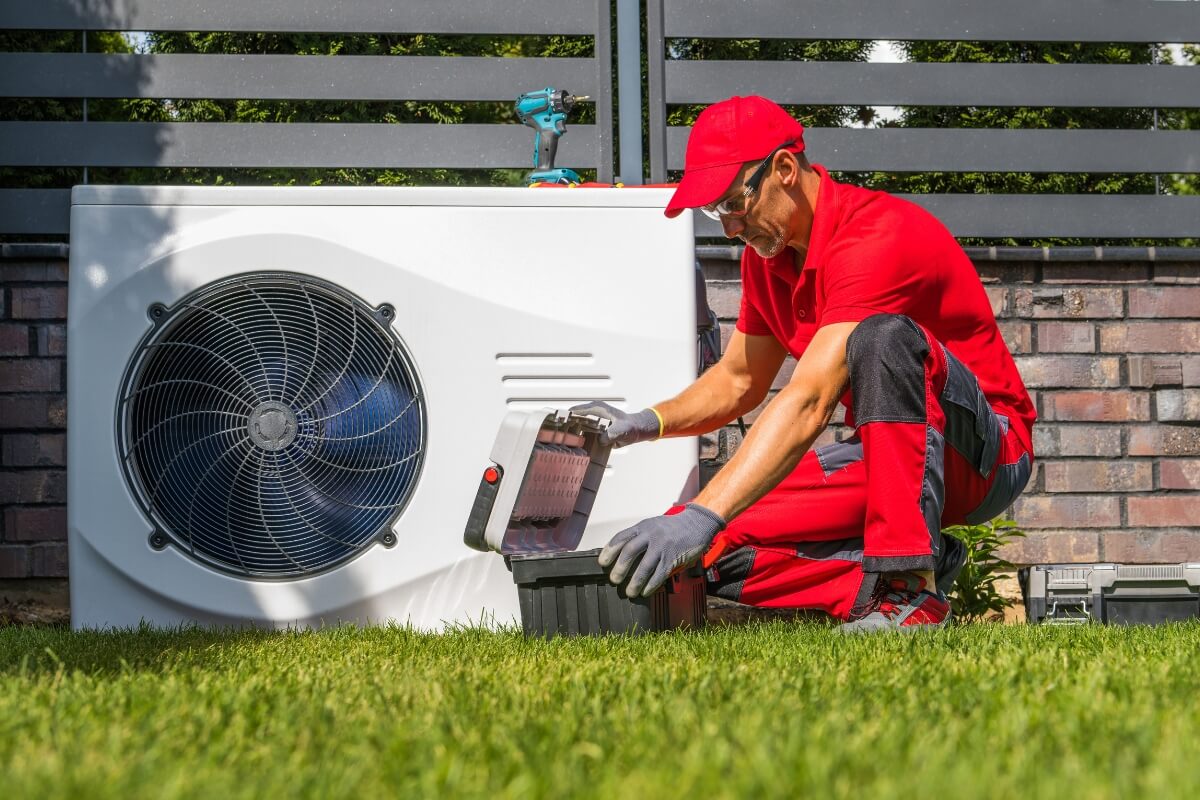
Investing in a heat pump is a long-term decision for your home’s comfort and energy savings. Professional consultation is key to making the best choice, and we’re here to help you understand why an HVAC upgrade is beneficial.
Sizing Your Air Conditioning Units & Heat Pumps System
Proper sizing is critical for the efficiency of air conditioning units heat pumps. An incorrectly sized unit will waste energy, fail to dehumidify properly, and wear out faster.
- Oversized units “short cycle,” leading to inefficiency and poor humidity control.
- Undersized units run constantly without reaching the desired temperature, increasing energy bills.
How to Size Correctly:
The only accurate way to size a system is with a professional load calculation using the ACCA Manual J method. This detailed analysis considers your home’s square footage, insulation, window types, local climate, and more. Our team can perform a precise assessment to ensure your new system is perfectly matched to your home.
Installation, Lifespan, and Maintenance
Proper installation is just as important as correct sizing. A qualified contractor will ensure all components are correctly installed, sealed, and charged for optimal performance. We also check for ductwork issues that could hinder airflow; learn more about our duct repair services.
- Typical Lifespan: Air-source heat pumps last 15-20 years with proper care. Geothermal systems last even longer, with the ground loop lasting 50-75 years.
- Regular Maintenance: Routine maintenance is essential for efficiency and longevity.
- Filter Changes: Homeowners should replace air filters every 1-3 months.
- Professional Tune-ups: We recommend annual tune-ups to prepare your system for the cooling and heating seasons. Regular service prevents breakdowns and can reduce energy costs by 5-10%. Consider our home care plan to keep your system in top shape.
Available Incentives and Rebates
Switching to a heat pump is more affordable than ever thanks to various incentives.
- Federal Tax Incentives (IRA): The Inflation Reduction Act offers significant tax credits for installing qualifying high-efficiency heat pumps.
- Home Electrification and Appliances Rebates (HEAR Program): This program provides direct rebates to low- and medium-income families, offering up to $8,000 for a qualifying heat pump. Learn more at the Home Electrification and Appliances Rebates page.
- State and Local Utility Rebates: Many utility companies in Florida and Alabama offer their own rebates. We can help you steer these programs to maximize your savings.
These incentives can dramatically reduce the net cost of a new heat pump, making it an even smarter investment.
Frequently Asked Questions about Air Conditioning Units & Heat Pumps
How much more does a heat pump cost than a central air conditioner?
A heat pump typically costs only a few hundred dollars more than an equivalent central AC unit. This small additional investment gets you a brand-new heating system, making it a very cost-effective choice when replacing an old AC.
Can a heat pump completely replace my furnace?
Yes, in moderate climates like Florida and Alabama, a heat pump can serve as your sole source for both heating and cooling. In colder regions, a dual-fuel system (heat pump paired with a furnace) is the most efficient solution, using the heat pump for mild weather and the furnace for extreme cold.
How often does a heat pump need maintenance?
A heat pump should be professionally serviced annually, ideally with a cooling check-up in the spring and a heating check-up in the fall. Homeowners should also replace filters every 1-3 months. This ensures peak performance, prevents breakdowns, and extends the system’s life.
The Smart Choice for Year-Round Comfort in Pensacola
For homeowners in Pensacola, Gulf Breeze, Foley, Fairhope, and our other service areas, choosing between air conditioning units heat pumps is a key decision. The benefits of a heat pump are clear: superior energy efficiency, lower utility bills, a smaller carbon footprint, and the convenience of a single system for year-round comfort.
Modern heat pumps are reliable and can handle our region’s weather, from hot summers to chilly winters. With incentives making them more affordable than ever, now is the perfect time to upgrade. For a professional evaluation to see if a heat pump is right for your home, trust the 65+ years of experience at McNorton HVAC. We are dedicated to providing reliable, energy-efficient solutions for your comfort and safety. Contact us today to learn more about our heat pump services.
Latest Articles
Don’t Sweat It: Why McNorton is Top-Rated Emergency HVAC Services in Pensacola

Shocking Truth: The Real Cost to Replace Your Electrical Panel